Wednesday, July 7, 2010

South East West Regional Day, Part II

Lunchtime gave everyone a chance to look round the traders and stretch their legs.


We had a raffle with lots of generous prizes from the traders, which seemed to go well, especially if you had a pink ticket.


Then the winners of the competitions were announced with our very own chair person, Alex Messenger, winning the ‘Rags or Riches’ section with a thought provoking denim piece, asking the question whether the people who make our clothes are paid fairly for their labour.

Second was Carolyn Walker and third was Liz Hykesman. Sadly, there weren’t many entries for the competition; it would be lovely to see more pieces on display? Does anyone have any alternative suggestions? Should it be more open or should we not a hold competition at all?


There was a separate competition for Young Embroiderers. The ‘Dolls’ competition for embroiderers aged 6-9 years, was one by Eleonor Surmin and Florence Cooper.


Florence Honey, Alison Mumford won the 10-13 years old competition. There were no entries in the 14-16 years section.


In the afternoon, we were all interested to hear Michael Brennand-Wood’s talk. We had to listen intently as he had a lot to tell us and spoke fluently and quickly. He explained that as a child, he spent time with his grandparents. His grandmother was a weaver and his grandfather was an engineer, so he spent time with textiles and in the shed with tools and wood and metal.

When he went to college he thought he would like to study Fine Art but then decided to switch into textiles as it was something of an unexplored area, and constantly tries to bring old skills up to date.

Although he found that many people involved in the UK Fine Art arena are very dismissive of pattern, he believes that pattern provides a visual language which helps to inform some of his work. His three main tenets are depth, translucency and structure.

He showed us many slides of his work from the 1990s, when he was exploring themes based on lace. Many of his pieces are large; two to three metres wide or more. It was interesting to see them hanging in galleries worldwide, even if they are not always hung as they are conceived to be seen. One such piece, consisting of five circles, was displayed in Japan ... in the opposite sequence to which Michael intended them to be.

He moved on to his more recent work, in which he started with Asian patterned textiles as a reference source and reproduced the shapes and colours by using Gerbera flowers, then had machine embroidered flower shapes made up. From there he started to reintroduce wood backgrounds, wire, lights and grids.

He has recently completed a piece of work for a community music venue in Bristol. It included many disc shapes covered in badges, embedded in the wall above a bar area. The discs were the size of various records, singles and CD, the badges all had the common theme of entertainers, such as Kylie Minogue. There were also LED lights set into the walls.

****************

Olympic Project 2012

Jill Drury explained that the Embroiderers’ Guild will be involved in the Olympics by asking each branch to produce some embroidered Postcards of a particular country represented at the Olympics. The postcards can represent anything to do with the country, such as flowers, coins, architecture (and embroidery, surely.

There was a draw starting with Andover, who drew Iraq; Cherwell Valley drew Ireland and Patsy pulled out Yemen, for Oxford, so there is a challenge. The postcards will be similar to the rainbow squares, except postcard sized, mounted over card and laced at the back. The cards will made up into rectangles, with the top left postcard being the flag of the nominated country. Each branch was given an envelope with more details, so we will be hearing a lot more about it I’m sure.

****************

Wolfson College was a special venue and everyone commented on how pleasant a setting it was. As Jill Drury predicted at the outset, it was a wonderful day.


Thank you to Sally Fulton for her detailed report of the day, and Ulrike Hutchins for the accompanying photographs.

Wednesday, June 30, 2010

South East West Regional Day, Part I

"Thanks to everyone at Oxford Branch who helped to make this such a wonderful day", were the sentiments of Jill Drury, the SEW region representative of the Embroiderers' Guild. Her words were also fully endorsed by all the visiting members of the region, with loud applause.

There was a buzz in the air from the start with the traders starting to set up at 8.30 on a very sunny summer morning. We had a great selection of books, threads, beads and finished items to choose from.


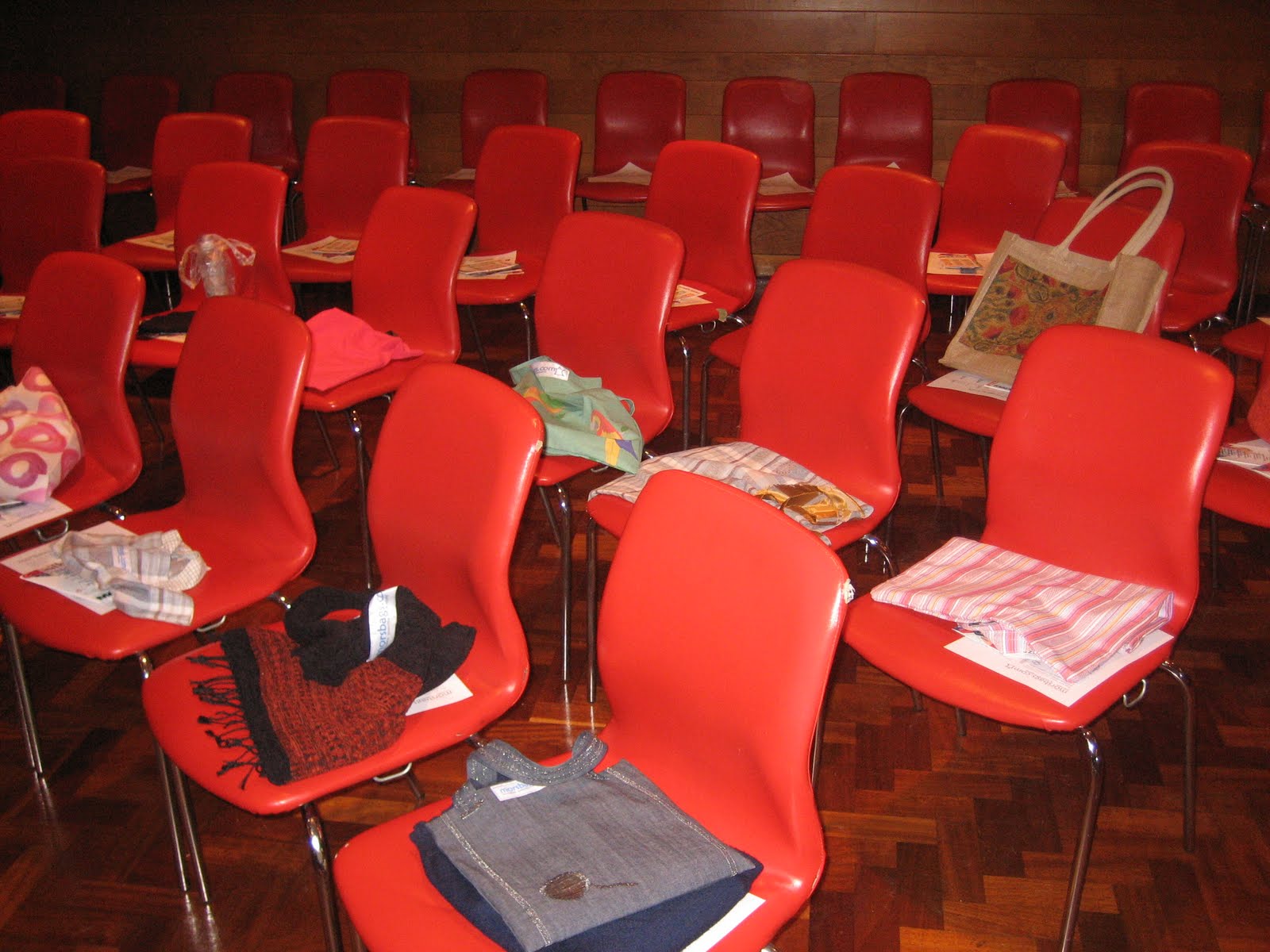
Visitors started arriving around 9.30; how quickly the time goes when everyone is preparing for the day. The Morsbags, made by Oxford Branch members and given to visitors, were well received. Then it was time for a reviving coffee before settling down to hear from the EG and from the morning speaker.


Jill Drury appealed for new regional committee members, as a considerable number of the current SEW committee are standing down this autumn. Jill herself will be continuing for a further year, but is happy to explain her role to anyone who may be thinking of volunteering and she could help the next person to take over gradually.


Anthea Godfrey from Headquarters explained that Contact Magazine is now available as eContact on the EG website and rather than giving us all a speech, she encouraged us all to read the substance of what she would say on the EG website as well. No news was given regarding any plans for moving from Hampton Court.

Alastair McMinn from Coats Crafts was also there and kindly brought some threads for us to try out, lovely colours in cotton and rayon. It was mentioned that we had chosen a good day to get away from all the sporting activities; football, Wimbledon and a Grand Prix. However, not many people noticed that the rainbow squares had been hung up in a slightly different sequence to the rainbow. In the reception area, they were hanging in the colours of the German flag and the English flag, as a reference to the World Cup game being played that afternoon!


Bobbie Britnell was the morning speaker, what a great choice. Bobbie told us about her earlier work experience in Soho, making costumes for shows such as "The Talk of the Town" and "The Black and White Minstrel Show", earning £6.50 per week. Then she moved to Savile Row Taylors and decided that she would like to teach, so after a year of comprehensive tailoring training, she enrolled at teacher training and went on to teach at a Comprehensive school at Guildford.

From there she completed City & Guilds parts 1 & 2 and then moved to rural Shropshire, where she still lives. She works freelance accepting opportunities to work in the community with all ages and backgrounds, from primary schools to a local detention centre.

She enjoys Morris Dancing in her spare time. Her husband also dances and they accompany each other’s group by playing the backing music, Bobbie plays an accordion and it is the dances and the music which informs a lot of her quilts. She travels to Europe to participate in dancing festivals and enjoys seeing the embroidered outfits that some of the other dance groups wear. She sketches and takes photos while she is there.

She had a lot of pieces for us to see as well as slides to illustrate her talk. The quilts were colourful and curious including the charmingly named "Such a Getting Upstairs I never did see" – which was named after a particular Morris dance.

"Such a Getting Upstairs I never did see 1, 2001", courtesy of Bobby Brittnell

"Such a Getting Upstairs I never did see 2, 2001", courtesy of Bobby Brittnell

Bobbie uses a certain weight of cotton for her quilts and dyes them all herself. Then she bonds shapes and overstitches quite heavily, using a slight zigzag stitch all over. She is interested in trying to produce a 3 dimensional effect from a 2 dimensional piece, using very realistic shadow effects – down the edge of a pleat for instance. The effect was very realistic.

She has recently built a studio annexe at her house and runs courses there, both on her own and together with Ruth Issett. She also invites visiting tutors to run courses, see her website for further information.

Lastly, she showed us some of her recent work which has much more abstract, neutral coloured backgrounds but with the addition of the red tulips which some of us saw at Art in Action last year. We all thoroughly enjoyed the talk and seeing the quilts close up.


The Buttery produced a great lunch and the weather was nice enough to sit outside on the terrace, what a bonus.

To be continued ...

Tuesday, June 22, 2010

SEW Regional Day - Michael Brennand-Wood

Michael Brennand-Wood

Michael Brennand-Wood, visual artist, curator, lecturer, arts consultant. Since 1979 he has occupied a central position in the research, origination and advocacy of contemporary International Art Textiles. He has exhibited in major galleries and museums world wide, including the Victoria and Albert Museum, the 21st Century Museum of Contemporary Art, Kanazawa and National Gallery of Australia, Canberra.

His work can be seen in private, public and corporate collections worldwide. He won The Creative Concept Award in 1987 and The Fine Art Award in 1989 at the International Textile Competition in Kyoto, followed by the first RSA Art for Architecture Award 1990. In 1990 he was awarded a Distinguished Visiting Fellow, British Council, City University, Kyoto, Japan. In 1992 he was 1st Prize Winner at the 3rd International Betonac Prize in Belgium.

"World of Echoes", courtesy of Michael Brennand-Wood

In 1982 he curated the controversial exhibition ‘Fabric and Form’ and co-curated the ‘Makers Eye’ both for the Crafts Council, followed in 1992 with ‘Restless Shadows’ a major Goldsmiths College touring exhibition of contemporary Japanese Textiles. Until 1989 he was a senior lecturer in the department of visual art at Goldsmiths College, University of London. He has taught extensively in colleges and universities in the UK and overseas, and has undertaken residencies in Japan, Australia, New Zealand, Canada, and Belgium.

From 2001-08 he was awarded an Arts and Humanities Research Board (AHRB) Fellowship in the Creative and Performing Arts in conjunction with the University of Ulster to research geometrical complexity in Central Asian textiles at Ulster University, Belfast. In 2007 he won the Fine Art Award, Pfaff Art Embroidery Still Life in France.

He is currently Visiting Professor at Manchester Metropolitan University.

"Flower Head- Narcissistic Butterfly", courtesy of Michael Brennand-Wood

He has recently competed two new works for the Yorkshire Cancer Centre in Leeds and developed an interdisciplinary arts programme for Colston Hall, a music venue in Bristol.

More information is available on Michael's website.

Friday, June 18, 2010

SEW Regional Day - Bobby Brittnell

Bobby Brittnell

Bobby has a background in tailoring and in making theatrical costumes for such shows as the Black and White Minstrels Talk of the Town and several West-end musicals. She later qualified as a teacher and ran the textile department in a large comprehensive school in Guildford and during her full time teaching also completed her City and Guilds in Embroidery.

Themes and ideas for her own work often stem from her immediate surroundings. She prefers to draw and play on paper or in a sketchbook to help generate thoughts and ideas, although at times can work intuitively and directly develop with the fabric and techniques. Music and dance also plays an important role in her life and these are often used as springboards in her work. Alternatively, venues and new challenges that group exhibitions may bring can inspire new directions and ways of working.

Most of the techniques that she employs include dyeing cotton fabric to which surface decoration is added through painting, printing and bonded appliqué. The work is then heavily machine-stitching to create a textured surface and then worked back into with drawing and stitching to create greater impact and definition. Newer work using still-life as inspiration is simpler in content and execution, but hopefully still has impact.

Bobby is a professional teacher and textile artist of standing in the UK and with an increasing international reputation. She teaches a variety of creative courses from her home in South Shropshire, England as well as all over the United Kingdom and abroad. In Sept 2008 she began tutoring on the BA (Hons) Embroidered Textiles Course for the Julia Caprara School of Textile Arts. She is a member of ‘The Textile Study Group’ a high profile national exhibiting and teaching group. She is a recommended tutor of the Embroiderers Guild and is a Fellow of the Royal Society of Arts. She has work in private collections in Great Britain, including the offices of KPMG, USA, Canada, Austria, Germany, and Portugal. Her work regularly appears in publications and books.

"Tulips on Tiptoes 1, 2008", courtesy of Bobby Brittnell


"Honesty 1, 2008", courtesy of Bobby Brittnell

Details can be found on Bobby's website.

Friday, June 11, 2010

9 June - Linda Rudkin, “Colours from Nature”

In June, Linda Rudkin gave a fascinating talk on dyeing natural fibres with natural products. After a brief introduction of how Linda got into dyeing after retiring from Teaching English at a comprehensive school in Leicestershire, she moved swiftly on to her fast paced, fact packed guide to dyeing.

Starting with a list of necessary equipment, the talk covered every aspect of dyeing. Linda told us about the various mordants that are used to fix the dye to the fibre, how and when they are added, and amused us with a couple of tales relating to the only mordant that she has never used - urine.

A good part of the talk covered the different materials that can be used and how various types of material should be treated. For each group (flowers and leaves, wood, vegetables, etc) Linda showed us sample boards that she made to record how different fibres (wool, silk, cotton, rayon, etc) absorb the dye and the effect of the various mordants. It was surprising to see that the colour obtained rarely bore any resemblance to the original plant stock and how a mordant can alter the hue or brightness.

Onion Sample Board, courtesy of Linda Rudkin

Logwood Sample Board, courtesy of Linda Rudkin

Velvet Cushion, courtesy of Linda Rudkin

It was a visit to the Bayeux Tapestry that started Linda on her exploration of colours from nature. The beautiful, soft shades of the wool and how well they have stood up to the test of time sparked an interest that has grown into an comprehensive knowledge and understanding of natural dyes.

At the end of the talk, Linda spoke briefly about Flower Pounding and showed us samples of her work using this method: the results are strikingly different from those obtained using a dye bath.

Flower Pounding Sample Board, courtesy of Linda Rudkin

On 18 September 2010 Linda will teaching a workshop on flower pounding. Judging by the oh’s and arh’s her samples produced, and the crowd around Fiona following the talk, the class is filling up fast. For further information or to book your place, contact Fiona.

Wednesday, June 2, 2010

South East West Regional Day

Sunday 27 June 2010

10.00am – 4.00pm

Wolfson College
Linton Road
Oxford OX2 6UD

Tickets £23.00

Includes two lectures, tea/coffee and lunch
Tickets must be order in advance (not available for purchase at the door)
(Tickets ordered after 20 June must be collected at the door on arrival)
Email creativethread@tiscali.co.uk

Speakers

Bobby Britnell (11.00am)


Bobby has always loved making things and needlework was the subject that she enjoyed most at school. Doing something creative with her hands was the obvious career path to follow. After working in theatrical costume and high class tailoring she trained to become a teacher and, whilst teaching, studied for C&G Embroidery I and II. As a member of high profile groups, including the Practical Study Group and “Six”, Bobby has exhibited widely and her work is in both public and private collections. Although she works from a number of different themes and sources, what remains consistent is the need to draw. Being wholly passionate about what she does enables her to become totally absorbed in the entire process, from idea through to execution.

Madeira Lecture by
Michael Brennand-Wood (2.00pm)

Visual artist, curator, lecturer, and arts consultant Michael is internationally regarded as one of the most innovative and inspiring artists working in textiles. He believes that the most innovative contemporary textiles emanate from an assured understanding of both textile technique and history. This has led him to explore and develop his own techniques, inventing many new and imaginative ways of integrating textiles with other media. Work inspired by traditions of floral imagery have utilised computerised machine embroidery, acrylic paint, wood, glass and collage. Exploring the illusionary space between two and three dimensions, these works are colourful, dramatic, rhythmic and holographic in feel, with intense detail that merges at the distance into strongly optical configurations.

Coats Competition
Rags or Riches

Open to all members and YEG
Exhibited in the Main Hall
Maximum size A2
Please bring ready to hang or display on table and ensure that your work is clearly labelled with your name and branch (and age if you are a YEG entry)

Traders

In Main Hall from 10.00am throughout the day, including:

21st Centry Yarns
Amanda Hislop
Artbooks
Art van Go
Gillsew
Mace & Nairn
Margaret Beal
Oxford Beadshop
Sue Rangeley
Threshing Barn
Vikki Lafford Accessories
Winifred Cottage

Exclusive – be one of the first to purchase Sue Rangeley’s new book and your name will be entered into a draw to win one of her exquisite bags or corsages. Draw takes place 1 July, 2010.

For further information and tickets please contact creativethread@tiscali.co.uk

Art Weeks at Appleton

I was not able to make the Fabrications Exhibition at Bampton, so I was delighted to get a second chance at least to see Amanda’s colourful combinations. This time Amanda was joined by Alex who displayed a selection of her delicate textiles. Hopefully, Alex and Karen will be giving their postponed talk "Our life with Cherrilyn" in the near future, so I will leave it to Alex to describe her work but she did allow me to take some pictures to share with you.

"Leaves on the Canal" courtesy of Alex Messenger

"Midnight Garden" courtesy of Alex Messenger

"Fragile" courtesy of Alex Messenger

No excuse was needed to attend this exhibition of several talented artists work, although the sunshine no doubt helped to encourage visitors out of their homes, and the delicious cakes on sale where a bonus. Textiles were well represented with a display of Japanese embroidery as well as Amanda and Alex beautiful work. Pottery, photography, painting, jewellery making and mosaics were also exhibited.

12 May - Judith Lovatt, “ What if ...?”

In May, Judith Lovatt gave a talk about her work and how to explore and develop your design ideas.

Since she was little, Judith stitched, knitted, printed and painted before becoming an art teacher. Judith enjoyed her work for 20 years but had to retire her post of head of an art department in secondary education due to arthritis. Judith continues to explore the possibilities of mixed media and loves to work with free hand and machine embroidery and has a particular passion for French knots which, she says, is the best stitch for texture and accent.

"Monet's Garden" courtesy of Judith Lovatt

"Monet's Garden - detail" courtesy of Judith Lovatt

"Blue Doodlebird" courtesy of Judith Lovatt

Judith brought with her countless examples of painting, printing and layering with fabric and thread. Her talk ended with a demonstration of blown spray painting.

1 May - Maggie Grey Workshop

Places on this workshop were filled as quickly as it was organised. Following her talk last year, Maggie very kindly agreed to squeeze us into her already very full schedule. Everyone knew of Maggie, either through her books, her blog or Workshop on the Web so the class was eagerly anticipated.

Entitled "Slip, Slap, Stitch", the idea is to make a slip and a background, slap the slip on the background and stitch them together. It was a fast paced class and we covered a lot of techniques. To begin with we foiled velvet and painted lutradur, which we set aside to dry. These were the basis of our background and later in the day we would sandwich them onto felt and machine stitch the layers together before burning away some of the lutradur with a hot air gun.


In the mean time we made our slip by machine embroidering an outline onto black felt, cutting out the shape, attaching it to another piece of felt and machine embroidering into the void spaces.


Finally, these were cut out again and stitched to the background.


Maggie is an engaging and enthusiastic tutor. A wealth of information and advice, she encouraged everyone to develop their own designs and ideas. I think that everyone who was lucky enough to secure a place on this workshop would agree that it was a thoroughly enjoyable and informative day.

14 April - Joanna O’Neill, "Books, Batting and Beeswax"

Have you ever wondered what it takes to be a judge at a major textile show? In April, Joanna O’Neill gave us an interesting insight to her adventures on the Quilter’s Guild judging course, and experience as judge at the Festival of Quilts.

The correspondence course is divided into six modules that cover a diverse range of subjects that encourage a wide appreciation of Art and Craft. Joanna brought along her extensive course notes and a huge pile of samples made during the design and construction techniques modules. The accredited course culminates in a Judging practical.

In addition, a selection of Joanna’s own quilts where on display.

"Golden Apples, Silver Apples" courtesy of Joanna O'Neill

"Breakout" courtesy of Joanna O'Neill

"Pearls and the Spider" courtesy of Joanna O'Neill

A new course is being planned to start in the autumn of 2011, details can be found on the Quilter’s Guild web site.

Thursday, May 6, 2010

Fabrications Exhibition at Bampton

One doesn't need an excuse to meet up with friends, and if one did - this is it.

The whole experience was a good one. The Fabrications were both physical and imaginative. I loved them...everyone seems to have moved on from previous work shown. I am filled with admiration for their sheer courage, because I know how difficult that step into a new phase is. Amanda [Smith] hold on colour combinations, Jane's mastery of the most delicate machine stitching, Jane O'Brian's combinations of stitch and colour, and Denise going into the snow, and finding inspiration where I fear to tread! My beloved friend Margaret keeping true to her core thoughts, but the drawings getting better and better each time, and her choice of colour thoughtful and deliberate, she knows how I feel so I won't embarrass her by going on. I think you can tell I enjoyed it greatly.

I would end by saying that I should have liked to share here some photographs - but the decision was taken not to allow photography.

by Joy Abrahams

(but Amanda kindly gave permision for me to include these pictures)

"Flowers in a Red Pot" courtesy of Amanda Smith

"Flowers in a Red Pot" courtesy of Amanda Smith

Wednesday, April 14, 2010

March 13-14 - Ruth Isset, Weekend Workshop

Those of us who did Ruth’s workshop a while ago on colouring papers were once again excited at the prospect of spending another weekend playing with colour. Admittedly, those of us who tend to work in monochrome and sludgy colours were wary of magenta and turquoise but this was our risk-free chance to try them out. Practiced workshop attendees know that, although we are given a materials list, you don’t have to bring everything listed and the kitchen sink (everyone does that at least the first time) as the tutor always has supplies and others are always willing to share.

First, Ruth took us through the technical bit about which fibres would react with the procion dyes which she had bought for us to use, how the weave of the fabric could affect the way in which the colour was taken up and may (or may not) spread. She talked about the relationships of colour, how a golden yellow will look different when next to a scarlet or emerald green, and how the colours change again when mixed. We weren’t expected to faithfully remember all this but it does help to have an introduction and if you wanted to know more, Ruth had bought copies of her books with her. If you just wanted a reminder of what can be achieved then her postcards were there too.

Looking at the wonderful range of coloured fabrics she had bought for us to see and handle helped you decide which colours you wanted to try out, but the fun of these workshops is to also try something which you probably wouldn’t do at home. Ruth kept us supplied throughout with ready-mixed colours and was happy to mix more when they ran out. She charged only a nominal amount for supplying everything (including brushes and pipettes) and it’s a much more economical way of experimenting than buying everything yourself.

Starting with a restricted range of colours, we chose 3 and painted first onto papers – taking one colour and adding just a hint of another to watch the gradual and subtle movement down the page – and, yes, there is a difference if you add the yellow to the green or add the green to the yellow. Then we did the same sort of exercise on fabrics some first prepared with the chemical solution (forget your chemistry lab and pungent odours, this is a very gentle solution which just helps to “loosen up” the fabrics) and we saw the difference when exactly the same colours were painted onto dry fabrics. Those with the chemical solution allowed the colours to blend much more, and what you first painted was not always what you ended up with as, if you allowed time for the paints to move around in their own way, they created soft fuzzy edges and halos of colour. We quickly found out who were the “bully boys” - the colours that make themselves known and shout louder than the others (magenta was a definite contender for this title).


Those who wanted to create an exercise book of colours, tones and mixes to refer back to went happily down that path, whilst others of us just played with the colours, putting this one next to that one. Using the same colours on different fabrics and threads gave us more ideas as they each delivered a different end result. We also tried toning down the colours to softer shades although they never quite ended up as pastels.

In between using the colours, Ruth would show us other ways of adding it to the fabric. If you had persuaded your cat to let go of his litter tray, then use it for space dying (a technique where you drop the paint onto the scrumpled up fabrics then dribble the solution on top so they run and blend together). Fold and tie your fabrics into tight little bundles and dip the edges into paint and watch it soak up, then when dry and unfolded you had a kaleidoscope of both pattern and colour (there were lots of oohhs and aaahs as we did this after lunch on Sunday).

Between us all we had a great range of fabrics – cottons, velvets, linens, organdies, muslins, silks – and likewise with threads. At the end of the weekend we had an even greater range of coloured fabrics and Ruth showed us some ways of then using them – starting with small blocks of colour and adding other next to it so the piece grows almost organically (and because you’ve dyed them with similar colours at the same time they blend very well together); or sewing them in patches one on top of another and using the dyed threads to add rows of running stitch; sewing them in tiny strips with frayed edges to see the graduation of colour; laying one on another and cutting back so the colour underneath is exposed.


With tea and coffee provided (help yourself style, with biscuits too) and a bring and share lunch this was a very relaxing but stimulating weekend. I’m not the only one looking forward to having Ruth back for more.